
PhD Opportunity: Decoding cattle diets in Northern Australia: eDNA insights for methane mitigation in rangelands
About the project:
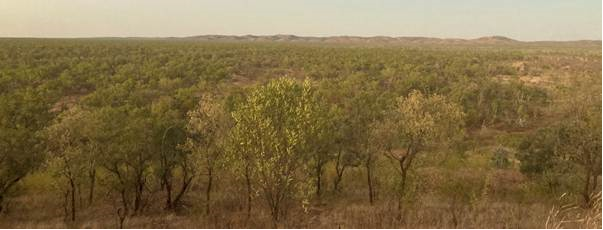
Native pastures of northern Australia are botanically diverse, supporting hundreds of species of grasses, forbs, trees and shrubs. Species have different nutritive value, digestibility and some have anti-methanogenic properties. Current carrying capacity methodology assumes cattle eat only the herbaceous layer of vegetation including grasses and forbs, but in many environments, such as in Central Australia and the Victoria River District, trees and shrubs are known to contribute a significant component of the diet through browse. However, which species they are eating and under what conditions is not well known. Current methods used to assess non-grass dietary components are of limited use in detecting browse in northern Australia. This PhD is part of a larger Zero Net Emissions Agriculture CRC project -Low Methane Feedbase Program- which aims to quantify the anti-methanogenic properties of northern Australian vegetation, but this information will be of limited applicability without knowing how these species currently contribute to cattle diets across northern Australia. Greenhouse gas emission estimates cannot be truly representative for the system without this.
This PhD will use field collected data, including faecal environmental DNA, to understand the contribution of different plant species in the diets of cattle in northern Australia. The student will then use these data along with anti-methanogenic compound concentrations and nutritional value data to test current greenhouse gas estimates for Australia’s north. This PhD is an excellent opportunity to work closely with government and industry partners including researchers from the Northern Territory Department of Agriculture and Fisheries
The student will ideally be based in Darwin or Alice Springs, but other locations are negotiable.
Project benefits
- An Australian Government Research Training Program (RTP) scholarship valued at $34,315/yr (from 2026, indexed annually and tax exempt) for 3 years full time from commencement + $10,000/yr top-up
- Relocation allowance ($2k)
- Paid sick leave
- Maternity leave
Project supervisors and advisors:
Beth Penrose (Charles Darwin University)
Maxine Piggot (Charles Darwin University)
Robyn Cowley (Northern Territory Government)
Caroline Pettit (Northern Territory Government)
About you
Essential skills and experience:
- First Class Honours or Masters degree containing a substantial research component in a relevant field such as agriculture, environmental science or similar
- Australian driving license or the capacity to easily get one
- Experience collecting field samples
- Ability and willingness to travel to regional and remote locations
Desirable skills and experience:
- Experience with molecular techniques and/or environmental DNA analysis
- Modelling experience using greenhouse gas, crop or animal models
- Publications, e.g. research reports, journal publications
How to apply
Please provide:
- A curriculum vitae, including a list of any peer-reviewed publications, conference presentations and relevant work and/or research experience
- A brief statement not exceeding 500-words in length that explains why you are interested in this research project/area
Send these documents to Beth Penrose ([email protected]). This position is open until filled.
For more information, please email Beth or contact her on 0436 839 662