
We have a new report celebrating the highlights of the GRA , available to download and share. Check it out HERE.
Test Aff
Latest News
The Global Research Alliance on Agricultural Greenhouse Gases (GRA) is very pleased to welcome El Salvador who joined us in June 2026 as our newest Member Country!
El Salvador’s participation in the GRA will be coordinated through the Ministry of Agriculture and Livestock (MAG), with its national focal point based at Centro Nacional de Tecnología Agropecuaria y Forestal (CENTA).
El Salvador recognises the importance of strengthening international cooperation, the exchange of scientific knowledge, and technological innovation aimed at reducing greenhouse gas emissions from the agricultural sector.
El Salvador considers participation in the Alliance to be a valuable opportunity to strengthen national capacities in research, mitigation, and adaptation to climate change, particularly in areas related to sustainable agriculture, soil management, resilient livestock systems, agroforestry systems, and food security.
Likewise, the country reaffirms its commitment to international climate action efforts, in line with the Paris Agreement and national priorities linked to sustainable development and climate resilience in the agricultural sector.
We warmly welcome El Salvador and look forward to their contributions to the GRA.
We are excited to announce the Round 7 recipients of Climate, Food and Farming – Global Research Alliance on Agricultural Greenhouse Gases Development Scholarships (CLIFF-GRADS). These PhD candidates from low- and middle-income countries have been selected from a large and highly competitive applicant pool, reflecting their outstanding qualifications and strong potential to advance agricultural climate research.
During 2026 and 2027, these fellows will undertake applied research focused on quantifying and mitigating agricultural greenhouse gas emissions, contributing to more sustainable food systems.
The 40 Round 7 CLIFF-GRADS fellows represent 21 countries from Asia, Africa, Latin America, and the Caribbean. They will carry out research placements at 33 host institutions worldwide.
CLIFF-GRADS offers short-term research placements of 4 to 6 months. These placements give early-career scientists access to specialized equipment, software, and international expertise not available at their home institutions. Fellows contribute to cutting-edge research in areas such as enteric methane, rice systems, soil emissions, and blue carbon ecosystems.
Please follow this LINK to learn about the scholars and research projects they’ll be part of.

June 2022

The Global Methane Pledge – from assessment to action
The Global Methane Pledge - from assessment to action: science, planning and implementation The Global Methane Pledge (GMP) aims to reduce methane emissions by at least 30 percent below 2020 levels by 2030. The session demonstrates a science-based roadmap from planning to implementation of sector-specific methane emission reduction activities to reach national GMP targets for developing and developed countries (as a blueprint that can be easily adopted by interested nations). Thematic categories: Primary thematic category: Advancing Implementation - keeping 1,5° alive Secondary thematic categories: NAP/NDC; cities,…
Find out more »Webinar: National agriculture inventory data collection and management
Join the Inventories and NDC (I&NDC) Network on 14 June from 18:00 – 19:30 (GMT/UTC) for the second session of their 2022 webinar series titled “National agriculture inventory data collection and management”. Policies for agriculture mitigation strategies, as we discussed in the first webinar of the I&NDC Network series, are shaped by accurate national agriculture emissions estimates. However, estimates are only as good as the data that underpin them. National activity data collection and its management is a universal challenge…
Find out more »GRA & APEC Workshop: Enhancing Agricultural Greenhouse Gases Inventory Methodology
The APEC – Global Research Alliance on Agricultural Greenhouse Gases (GRA) Virtual Workshop on Enhancing Agricultural Greenhouse Gas Inventory Methodologies will be held on 16 June 2022 from 3 pm to 6 pm (NZST). Registrations are open until 31 May 2022. This event is part of the Agricultural Technical Cooperation Working Group (ATCWG)’s objectives, and it will deliver on New Zealand’s key action items on the Food Security Roadmap Towards 2030, improving agricultural greenhouse gases (GHG) inventories. The objectives of…
Find out more »
Agri Benchmark Global Forum: Emissions, mitigation and economics
This hybrid event is part of the agri benchmark Beef and Sheep Conference 2022. During the session "Examples for GHG mitigation measures for cattle" from 11:15 am - 12:15 pm the first results from the EMiFa project, the flagship project of the Farm To Regional Scale Integration Network, will be presented. View the session via this Webex link. Agenda of the Global Forum "Emissions, mitigation and economics" 09:00 am - 09:30 am (CEST): Welcome and setting the frame09:30 am -…
Find out more »Enhancing climate action through peatlands
The Food and Agriculture Organization of the United Nations (FAO) in the context of the project Global Peatlands Initiative* is launching a series of events. FAO in collaboration with the Ramsar Convention on Wetlands, Wetlands International, CIFOR, Greifswald Mire Center, the NDC Partnership and UNEP, are pleased to invite you to the online consultation: Peatlands and climate commitments Session 1: Enhancing climate action through peatlands The session will be organized on 2 different occasions on Thursday 23 June 2022: Morning…
Find out more »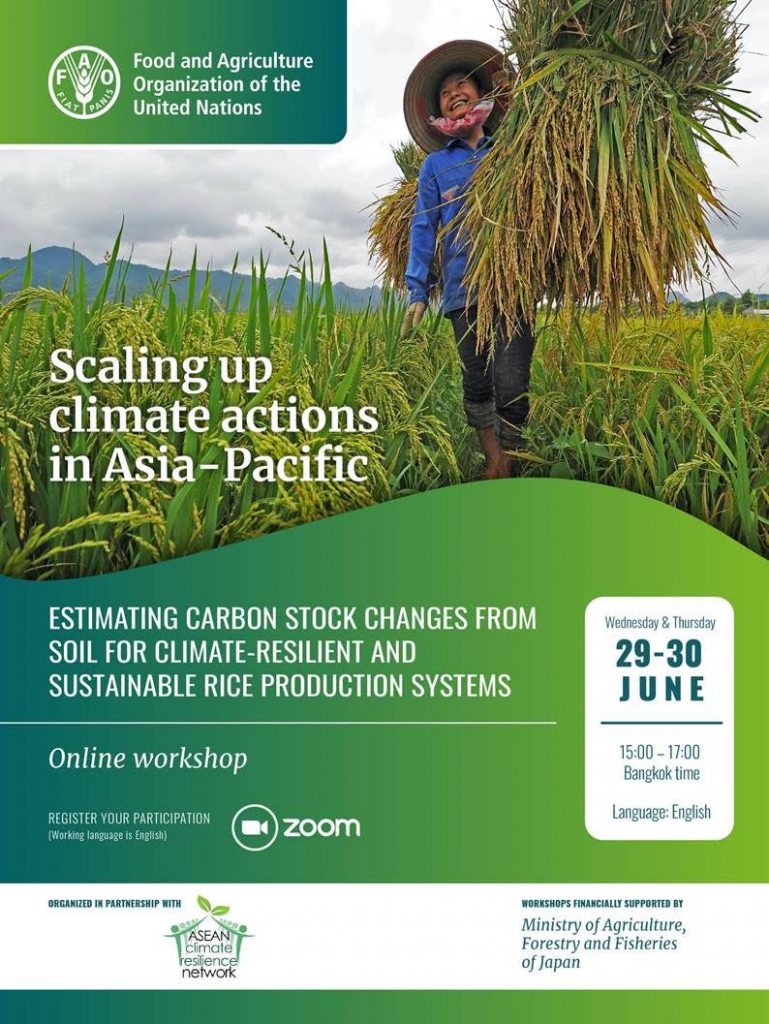
Workshop Day 1: Scaling up Climate Actions in Asia Pacific
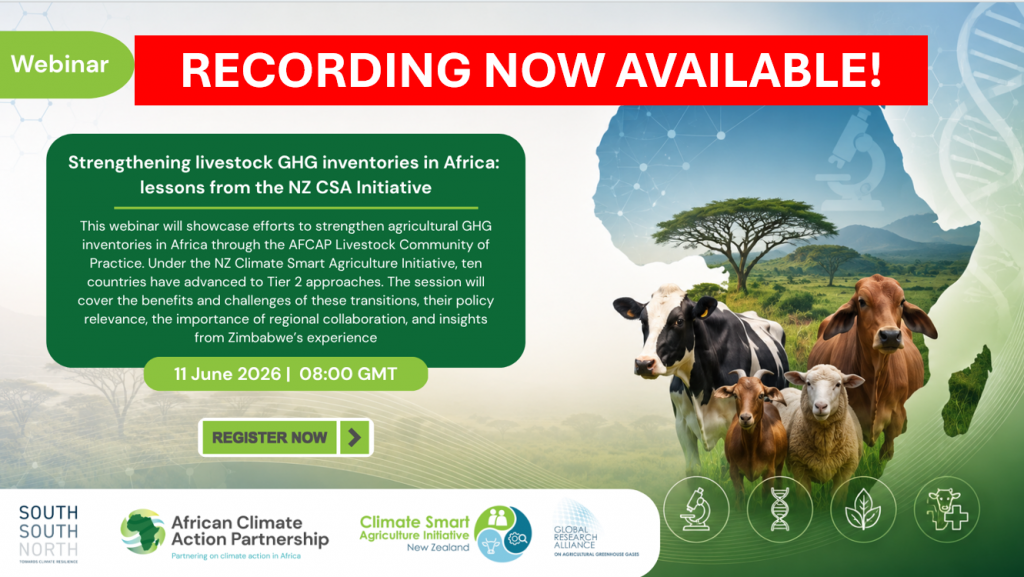
The workshop “Scaling up Climate Actions in Asia Pacific, Estimating carbon stock changes from soil for climate-resilient and sustainable rice production systems” will take place virtually (via Zoom) on 29 and 30 June 2022, 15:00 – 17:00 (Bangkok time). Please find the program and concept note below.
Find out more »
Webinar: Measuring changes across households implementing climate-smart agriculture
Join this webinar organised by AICCRA to learn about the adoption and impact of climate-smart agriculture practices from a study documenting the livelihood changes of over 800 households. Further information and the agenda can be found here.
Find out more »Workshop Day 2: Scaling up Climate Actions in Asia Pacific
The workshop “Scaling up Climate Actions in Asia Pacific, Estimating carbon stock changes from soil for climate-resilient and sustainable rice production systems” will take place virtually (via Zoom) on 29 and 30 June 2022, 15:00 – 17:00 (Bangkok time). Please find the program and concept note below.
Find out more »July 2022
Pre-WCGALP Congress ASSGN Event
This event is aligned with the World Congress on Genetics Applied to Livestock Production which is being held in Rotterdam, The Netherlands, from 3-8 July 2022. Title: Measuring Methane Microbes and Feed Intake for breeding schemes: Animal Selection, Genetics and Genomics Network Come and join the always lively, practical and informative discussion by members of the Global Research Alliance Animal Selection, Genetics & Genomics Network. This will be a mixture of presentations and discussions on current methods for phenotyping methane,…
Find out more »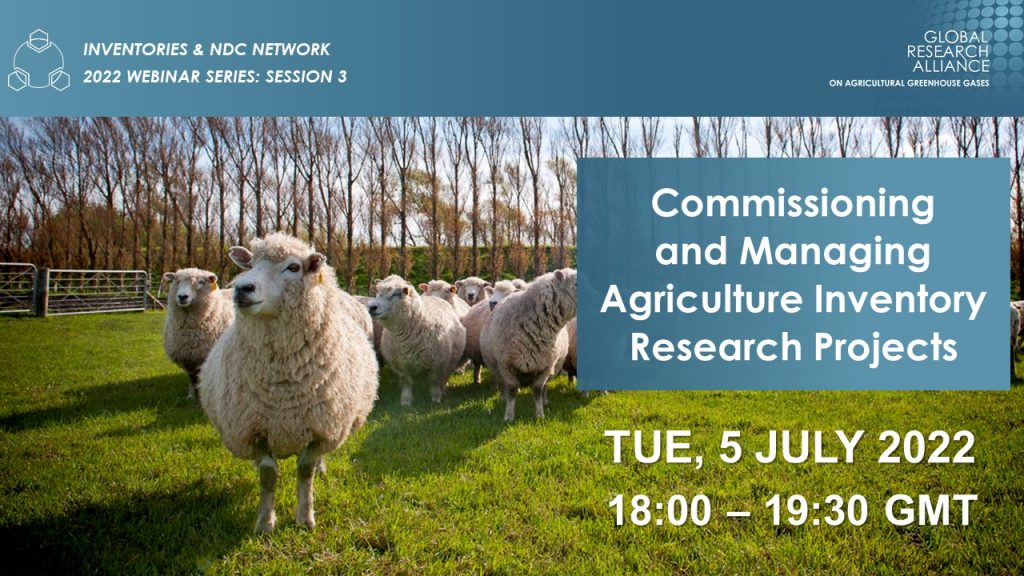
Webinar: Commissioning and managing agriculture inventory research projects
Join the Inventories and NDC (I&NDC) Network on 5 July from 18:00 – 19:30 (GMT/UTC) for the third session of their 2022 webinar series titled “Commissioning and managing agriculture inventory research projects”. It is crucial to effectively determine research priorities when resources for research are limited. Developing multilateral research projects and working with international research organisations facilitates collaboration across countries with similar production systems and agricultural circumstances. In the first part of the session, we will hear from experts on…
Find out more »Paddy Rice Research Americas Sub-Group Meeting
The Fifth Scientific Meeting of the Americas Sub-Group of Paddy Rice Research Group (PRRG) is taking place on July 12-14, 2022 in Jonesboro, Arkansas, USA. This meeting is organized by the Delta Water Management Research Unit, United States Department of Agriculture-Agricultural Research Service (DWMRU, USDA-ARS), Global Research Alliance on Agricultural Greenhouse Gases (GRA) and the Latin American Fund for Irrigated Rice (FLAR, by its acronym in Spanish). In person meeting registration has now closed. However, interested GRA-PRRG country delegates and…
Find out more »Webinar: Managing N2O
This webinar series is sponsored by the International Soil Carbon Network in partnership with the Midwest, Northeast, and Northwest USDA Climate Hubs, the American Geophysical Union, and the tri-societies–the American Society of Agronomy, Crop Science Society of America, and Soil Science Society of America. Keen public interest in soil carbon sequestration will test the scientific community’s ability to deliver effective soil management practices and durable scientific concepts. In this webinar series we will hear diverse perspectives on key questions that…
Find out more »