9013

Latest News

August 5, 2026   •   News

Posted: July 30, 2026 in Agriculture

Written By John Tauzel

Methane pollution is responsible for about a third of the warming we’re already experiencing through more frequent and severe heatwaves, wildfires and droughts, and livestock are one of the largest sources of human-caused methane emissions. Most livestock methane comes from cow burps and manure management, making dairy and beef production an important climate opportunity.

The good news? Livestock methane solutions are ready to scale up, and they also can help strengthen farmer incomes and food production.

Livestock methane is a major but solvable climate problem.

Reducing methane emissions is the fastest way to slow rates of warming. It can help deliver climate benefits within our lifetimes while reducing the risks of extreme weather that are already affecting communities and farmers around the world.

In our new “EDF Explains” video , I break down the basics of livestock methane, why it matters and what can be done about it.

We already have solutions, but they need to fit different farms. 

Methane solutions need to be tailored to the farming operation. Dairy and beef operations vary widely in size, geography and resources. A solution that works on a large dairy farm in the U.S. may not be practical for a smallholder farmer elsewhere in another country.

We need a flexible, science-based approach.

Today, a growing number of proven methane-reduction solutions are available. These include feed supplements that reduce methane from cow burps, improved manure management practices, and strategies that support animal health and productivity. These approaches can help lower emissions while supporting farmers’ livelihoods and maintaining access to nutritious food.

Farmers need support to make progress, and technology alone isn’t enough.

Many methane-reducing practices require technical expertise, financing and policy support to help farmers adopt them successfully. Expanding access to these resources will be critical to scaling climate solutions across the livestock sector.

Programs like USDA’s Environmental Quality Incentives Program, which helps producers invest in conservation practices, demonstrate how financial assistance and technical support can reduce barriers to adopting methane-reducing solutions. Expanding access to these kinds of programs would allow more farmers to benefit from proven climate technologies.

Reducing livestock methane won’t solve climate change on its own, but it is one of the fastest and most effective actions available today. By ensuring farmers have support to adopt methane fixes that make sense for their farms, we can help create a more resilient food system while making meaningful progress toward climate goals.
July 8, 2026   •   News

We are excited to announce the Round 7 recipients of Climate, Food and Farming – Global Research Alliance on Agricultural Greenhouse Gases Development Scholarships (CLIFF-GRADS). These PhD candidates from low- and middle-income countries have been selected from a large and highly competitive applicant pool, reflecting their outstanding qualifications and strong potential to advance agricultural climate research.

During 2026 and 2027, these fellows will undertake applied research focused on quantifying and mitigating agricultural greenhouse gas emissions, contributing to more sustainable food systems.

The 40 Round 7 CLIFF-GRADS fellows represent 21 countries from Asia, Africa, Latin America, and the Caribbean. They will carry out research placements at 33 host institutions worldwide.                                                                                                                                                                                                                                               

CLIFF-GRADS offers short-term research placements of 4 to 6 months. These placements give early-career scientists access to specialized equipment, software, and international expertise not available at their home institutions. Fellows contribute to cutting-edge research in areas such as enteric methane, rice systems, soil emissions, and blue carbon ecosystems.

Please follow this LINK to learn about the scholars and research projects they’ll be part of.

July 3, 2026   •   News

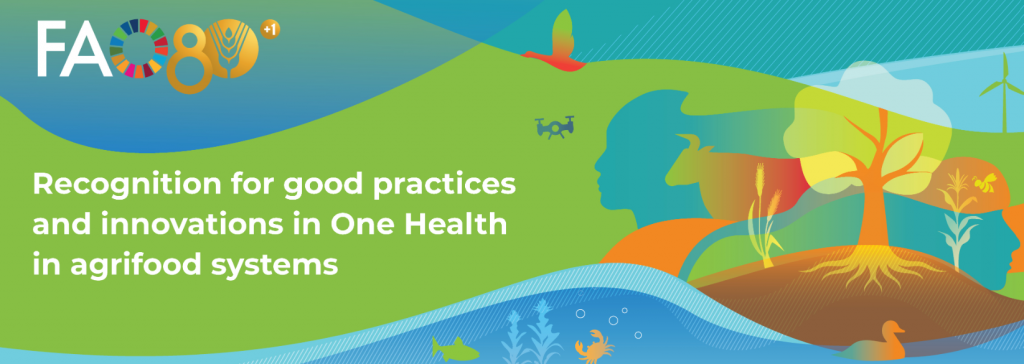
One Health in agrifood systems: Recognition for good practices, success stories and innovations in applying the One Health approach

As part of this year’s Global Conference for Actions on One Health in Agrifood Systems, FAO will celebrate best practices and outstanding innovations advancing the One Health approach across agrifood systems. Through this recognition, we will shine a spotlight on pioneering efforts from stakeholders across agrifood systems – showcasing impactful solutions and inspiring future action toward integrated, inclusive, sustainable, and health-oriented agrifood systems.

Objectives

This recognition aims to promote successfully implemented good practices and outstanding innovations in One Health in agrifood systems that have demonstrated significant measurable impact, and to inspire continued innovation through global stakeholder collaboration.

Scope

The Global Conference will recognize practices, success stories and solutions that represent significant advancements or innovations in One Health approaches and sustainable livestock transformation across the entire value chain, successfully implemented at scale in villages, communities, and cities across the world. 

These may include new technologies, systems, practices, or solutions that improve efficiency and support action on One Health in agrifood systems and the sustainable transformation of the livestock value chain, encompassing food security, greenhouse gas mitigation, animal health and welfare, antimicrobial resistance, sustainable livestock farming systems, Indigenous Peoples and pastoralist knowledge systems, women and girls empowerment, capacity development for small-scale producers,  finance, post-processing, and policy support.

Eligibility

The conference welcomes applications from institutions, international and regional organizations, academic or research entities, civil society groups, and private sector entities. Applications from women, youth, and Indigenous Peoples are particularly encouraged. FAO employees are not eligible to apply.

Selection process

An international panel of experts nominated by FAO will assess the applications, with attention to inclusive and balanced representation across regions, genders, expertise fields, disciplines, and stakeholder groups. 

Evaluations will be based on the following criteria:

  • Impact and practical application: Demonstrated real-world results and effectiveness.
  • Innovation and originality: Novelty and uniqueness of the proposed approach.
  • Inclusivity and social impact: Contribution to gender equality, youth engagement, Indigenous communities’ involvement.
  • Scalability and replicability: Potential for adoption and implementation across diverse contexts and regions.
  • Sustainability: Contribution to long-term resilience in agrifood systems.

Recognition, demonstration and ceremony

Recipients will receive official recognition at the FAO Global Conference for Actions on One Health in Agrifood Systems, to be held from 21–23 September 2026 at FAO headquarters. A dedicated technical presentation session and innovation pitch talk will be organized as a special event.

Applications should be submitted by 10 July 2026

Click HERE to apply

Loading Events

Past Featured Events

June 2022

The Global Methane Pledge – from assessment to action

June 13, 2022 @ 1:15 pm - 2:45 pm CEST

The Global Methane Pledge - from assessment to action: science, planning and implementation The Global Methane Pledge (GMP) aims to reduce methane emissions by at least 30 percent below 2020 levels by 2030. The session demonstrates a science-based roadmap from planning to implementation of sector-specific methane emission reduction activities to reach national GMP targets for developing and developed countries (as a blueprint that can be easily adopted by interested nations). Thematic categories: Primary thematic category: Advancing Implementation - keeping 1,5° alive Secondary thematic categories: NAP/NDC; cities,…

Find out more »

Webinar: National agriculture inventory data collection and management

June 14, 2022 @ 6:00 pm - 7:30 pm UTC

Join the Inventories and NDC (I&NDC) Network on 14 June from 18:00 – 19:30 (GMT/UTC) for the second session of their 2022 webinar series titled “National agriculture inventory data collection and management”. Policies for agriculture mitigation strategies, as we discussed in the first webinar of the I&NDC Network series, are shaped by accurate national agriculture emissions estimates. However, estimates are only as good as the data that underpin them. National activity data collection and its management is a universal challenge…

Find out more »

GRA & APEC Workshop: Enhancing Agricultural Greenhouse Gases Inventory Methodology

June 16, 2022 @ 3:00 pm - 6:00 pm NZST

The APEC – Global Research Alliance on Agricultural Greenhouse Gases (GRA) Virtual Workshop on Enhancing Agricultural Greenhouse Gas Inventory Methodologies will be held on 16 June 2022 from 3 pm to 6 pm (NZST). Registrations are open until 31 May 2022. This event is part of the Agricultural Technical Cooperation Working Group (ATCWG)’s objectives, and it will deliver on New Zealand’s key action items on the Food Security Roadmap Towards 2030, improving agricultural greenhouse gases (GHG) inventories. The objectives of…

Find out more »

Agri Benchmark Global Forum: Emissions, mitigation and economics

June 17, 2022 @ 9:00 am - 4:00 pm CEST

This hybrid event is part of the agri benchmark Beef and Sheep Conference 2022. During the session "Examples for GHG mitigation measures for cattle" from 11:15 am - 12:15 pm the first results from the EMiFa project, the flagship project of the Farm To Regional Scale Integration Network, will be presented. View the session via this Webex link. Agenda of the Global Forum "Emissions, mitigation and economics" 09:00 am - 09:30 am (CEST): Welcome and setting the frame09:30 am -…

Find out more »

Enhancing climate action through peatlands

June 23, 2022 @ 9:30 am - 11:30 am CEST

The Food and Agriculture Organization of the United Nations (FAO) in the context of the project Global Peatlands Initiative* is launching a series of events. FAO in collaboration with the Ramsar Convention on Wetlands, Wetlands International, CIFOR, Greifswald Mire Center, the NDC Partnership and UNEP, are pleased to invite you to the online consultation: Peatlands and climate commitments Session 1: Enhancing climate action through peatlands The session will be organized on 2 different occasions on Thursday 23 June 2022: Morning…

Find out more »

Workshop Day 1: Scaling up Climate Actions in Asia Pacific

June 29, 2022 @ 3:00 pm - 5:00 pm BMT

The workshop “Scaling up Climate Actions in Asia Pacific, Estimating carbon stock changes from soil for climate-resilient and sustainable rice production systems” will take place virtually (via Zoom) on 29 and 30 June 2022, 15:00 – 17:00 (Bangkok time). Please find the program and concept note below.

Find out more »

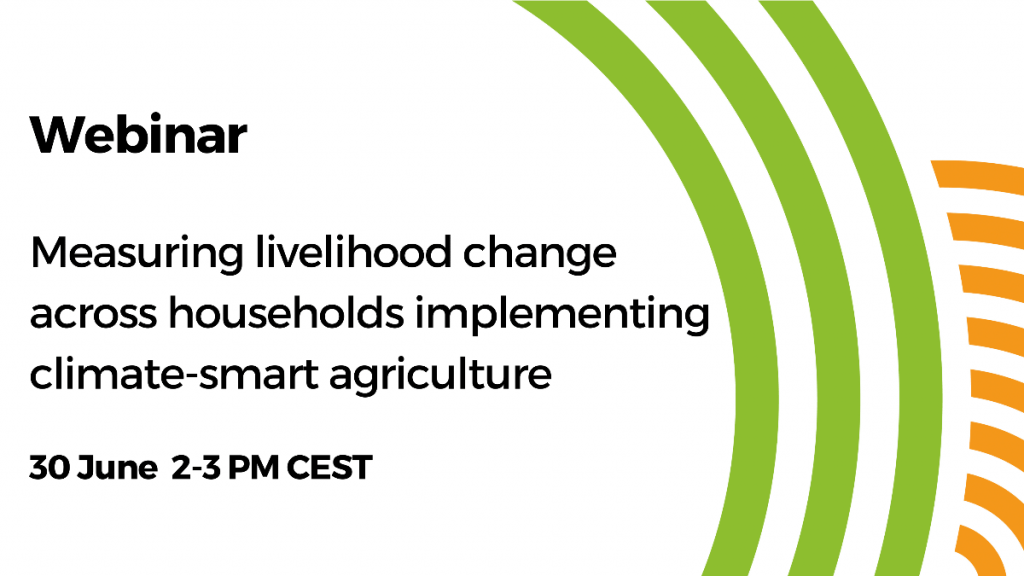
Webinar: Measuring changes across households implementing climate-smart agriculture

June 30, 2022 @ 2:00 pm - 3:00 pm CEST

Join this webinar organised by AICCRA to learn about the adoption and impact of climate-smart agriculture practices from a study documenting the livelihood changes of over 800 households. Further information and the agenda can be found here.

Find out more »

Workshop Day 2: Scaling up Climate Actions in Asia Pacific

June 30, 2022 @ 3:00 pm - 5:00 pm BMT

The workshop “Scaling up Climate Actions in Asia Pacific, Estimating carbon stock changes from soil for climate-resilient and sustainable rice production systems” will take place virtually (via Zoom) on 29 and 30 June 2022, 15:00 – 17:00 (Bangkok time). Please find the program and concept note below.

Find out more »

July 2022

Pre-WCGALP Congress ASSGN Event

July 3, 2022 @ 1:00 pm - 5:00 pm CEST
De Doelen International Conference Center Rotterdam, Schouwburgplein 50
Rotterdam, Netherlands

This event is aligned with the World Congress on Genetics Applied to Livestock Production which is being held in Rotterdam, The Netherlands, from 3-8 July 2022. Title: Measuring Methane Microbes and Feed Intake for breeding schemes: Animal Selection, Genetics and Genomics Network Come and join the always lively, practical and informative discussion by members of the Global Research Alliance Animal Selection, Genetics & Genomics Network. This will be a mixture of presentations and discussions on current methods for phenotyping methane,…

Find out more »

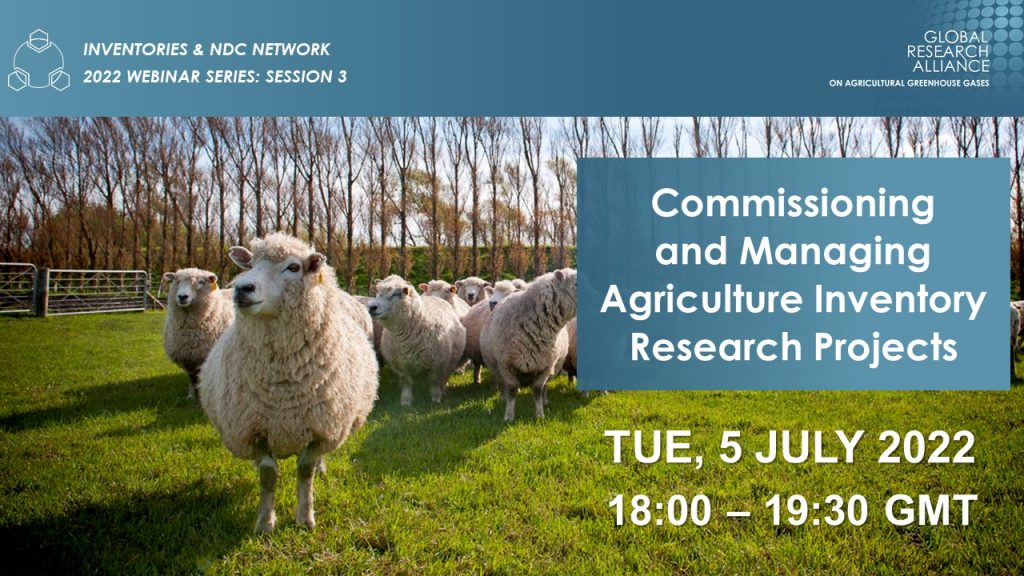
Webinar: Commissioning and managing agriculture inventory research projects

July 5, 2022 @ 6:00 pm - 7:30 pm UTC

Join the Inventories and NDC (I&NDC) Network on 5 July from 18:00 – 19:30 (GMT/UTC) for the third session of their 2022 webinar series titled “Commissioning and managing agriculture inventory research projects”. It is crucial to effectively determine research priorities when resources for research are limited. Developing multilateral research projects and working with international research organisations facilitates collaboration across countries with similar production systems and agricultural circumstances. In the first part of the session, we will hear from experts on…

Find out more »

Paddy Rice Research Americas Sub-Group Meeting

July 12, 2022 @ 8:00 am - July 14, 2022 @ 6:00 pm CDT

The Fifth Scientific Meeting of the Americas Sub-Group of Paddy Rice Research Group (PRRG) is taking place on July 12-14, 2022 in Jonesboro, Arkansas, USA. This meeting is organized by the Delta Water Management Research Unit, United States Department of Agriculture-Agricultural Research Service (DWMRU, USDA-ARS), Global Research Alliance on Agricultural Greenhouse Gases (GRA) and the Latin American Fund for Irrigated Rice (FLAR, by its acronym in Spanish). In person meeting registration has now closed. However, interested GRA-PRRG country delegates and…

Find out more »

Webinar: Managing N2O

July 12, 2022 @ 3:00 pm - 4:00 pm EDT

This webinar series is sponsored by the International Soil Carbon Network in partnership with the Midwest, Northeast, and Northwest USDA Climate Hubs, the American Geophysical Union, and the tri-societies–the American Society of Agronomy, Crop Science Society of America, and Soil Science Society of America. Keen public interest in soil carbon sequestration will test the scientific community’s ability to deliver effective soil management practices and durable scientific concepts. In this webinar series we will hear diverse perspectives on key questions that…

Find out more »
+ Export Events