We have a new report celebrating the highlights of the GRA , available to download and share. Check it out HERE.
World Farmers Organisation
Latest News
The Global Research Alliance on Agricultural Greenhouse Gases (GRA) is very pleased to welcome El Salvador who joined us in June 2026 as our newest Member Country!
El Salvador’s participation in the GRA will be coordinated through the Ministry of Agriculture and Livestock (MAG), with its national focal point based at Centro Nacional de Tecnología Agropecuaria y Forestal (CENTA).
El Salvador recognises the importance of strengthening international cooperation, the exchange of scientific knowledge, and technological innovation aimed at reducing greenhouse gas emissions from the agricultural sector.
El Salvador considers participation in the Alliance to be a valuable opportunity to strengthen national capacities in research, mitigation, and adaptation to climate change, particularly in areas related to sustainable agriculture, soil management, resilient livestock systems, agroforestry systems, and food security.
Likewise, the country reaffirms its commitment to international climate action efforts, in line with the Paris Agreement and national priorities linked to sustainable development and climate resilience in the agricultural sector.
We warmly welcome El Salvador and look forward to their contributions to the GRA.
We are excited to announce the Round 7 recipients of Climate, Food and Farming – Global Research Alliance on Agricultural Greenhouse Gases Development Scholarships (CLIFF-GRADS). These PhD candidates from low- and middle-income countries have been selected from a large and highly competitive applicant pool, reflecting their outstanding qualifications and strong potential to advance agricultural climate research.
During 2026 and 2027, these fellows will undertake applied research focused on quantifying and mitigating agricultural greenhouse gas emissions, contributing to more sustainable food systems.
The 40 Round 7 CLIFF-GRADS fellows represent 21 countries from Asia, Africa, Latin America, and the Caribbean. They will carry out research placements at 33 host institutions worldwide.
CLIFF-GRADS offers short-term research placements of 4 to 6 months. These placements give early-career scientists access to specialized equipment, software, and international expertise not available at their home institutions. Fellows contribute to cutting-edge research in areas such as enteric methane, rice systems, soil emissions, and blue carbon ecosystems.
Please follow this LINK to learn about the scholars and research projects they’ll be part of.

October 2023
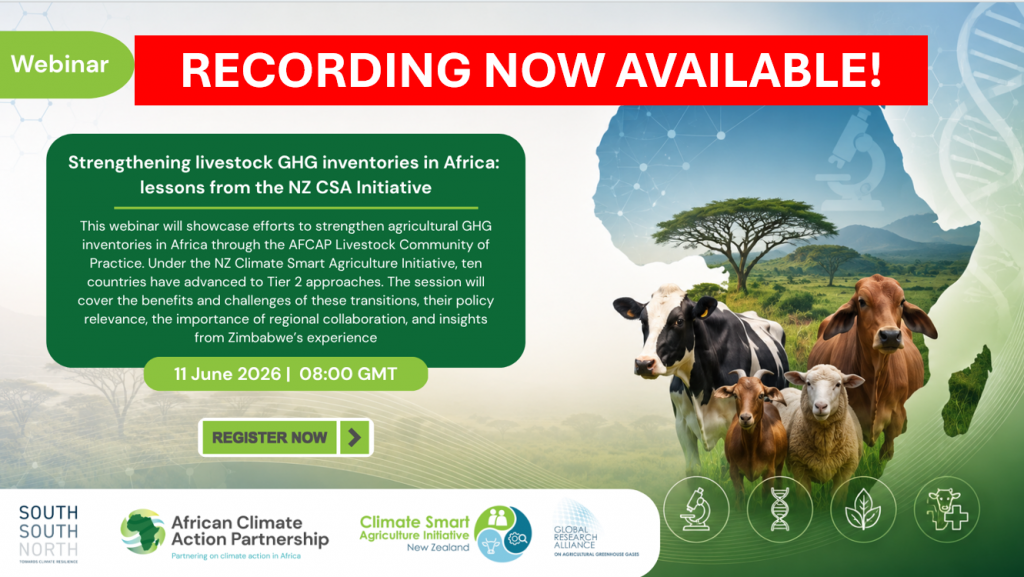
Webinar: HoloRuminant Joint Dissemination Network, Session 3
The HoloRuminant Joint Dissemination Network (JDN) consists of 5 projects representing a complementary effort to reduce the environmental and climate footprint of livestock production - while guaranteeing genetic diversity and efficient production in a more constrained environment - by focusing on the mitigation of GHG emissions improving the health and welfare of farmed animals and increasing the sustainability of animal production systems. The project group joins forces to provide an environment to optimize and share efforts. Registration details for all webinars can be found HERE.
Find out more »Webinar – “Soil inorganic carbon: The often unaccounted yet irrecoverable carbon pool”
This webinar is being organised by "4 per 1000" and is the second in their soil carbon science webinar series. Soil inorganic carbon (SIC), a pivotal component of terrestrial carbon stocks, contributes to up to half of the terrestrial C stock and holds significance in arid and semi-arid environments. Despite its importance in agriculture, CO2 sequestration, and climate regulation, SIC has received less attention compared to soil organic carbon (SOC). Recent findings challenge the notion of SIC's negligible contribution to…
Find out more »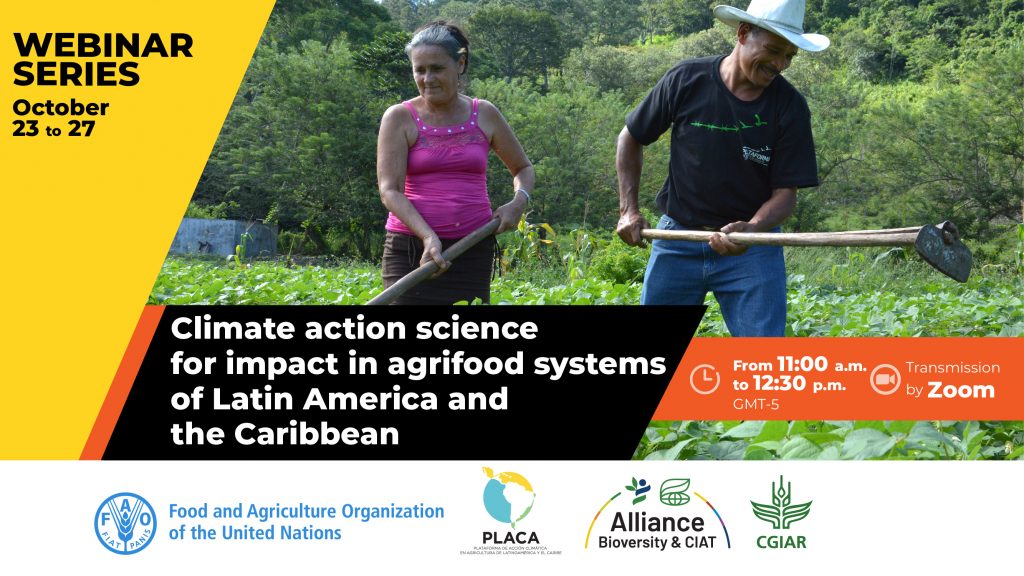
Webinar series: Climate action science to impact Latin American and Caribbean agrifood systems – LAC
Climate change is profoundly affecting Latin America and the Caribbean (LAC) endangering agriculture, water, and public health. Increased hurricanes and flooding displace communities and damage economies. Rising sea levels threaten coastal areas, and the resulting inequalities affect vulnerable populations and indigenous communities. Addressing these challenges in the LAC region requires concerted efforts, innovative solutions and regional and international cooperation. Under the above context and within the framework of the Latin America and Caribbean Climate Week (LACCW), the Alliance of Bioversity…
Find out more »Webinar series: Climate action science to impact Latin American and Caribbean agrifood systems – Central America
Climate change is profoundly affecting Latin America and the Caribbean (LAC) endangering agriculture, water, and public health. Increased hurricanes and flooding displace communities and damage economies. Rising sea levels threaten coastal areas, and the resulting inequalities affect vulnerable populations and indigenous communities. Addressing these challenges in the LAC region requires concerted efforts, innovative solutions and regional and international cooperation. Under the above context and within the framework of the Latin America and Caribbean Climate Week (LACCW), the Alliance of Bioversity…
Find out more »Webinar series: Climate action science to impact Latin American and Caribbean agrifood systems – Caribe
Climate change is profoundly affecting Latin America and the Caribbean (LAC) endangering agriculture, water, and public health. Increased hurricanes and flooding displace communities and damage economies. Rising sea levels threaten coastal areas, and the resulting inequalities affect vulnerable populations and indigenous communities. Addressing these challenges in the LAC region requires concerted efforts, innovative solutions and regional and international cooperation. Under the above context and within the framework of the Latin America and Caribbean Climate Week (LACCW), the Alliance of Bioversity…
Find out more »Webinar series: Climate action science to impact Latin American and Caribbean agrifood systems – Region Andina
Climate change is profoundly affecting Latin America and the Caribbean (LAC) endangering agriculture, water, and public health. Increased hurricanes and flooding displace communities and damage economies. Rising sea levels threaten coastal areas, and the resulting inequalities affect vulnerable populations and indigenous communities. Addressing these challenges in the LAC region requires concerted efforts, innovative solutions and regional and international cooperation. Under the above context and within the framework of the Latin America and Caribbean Climate Week (LACCW), the Alliance of Bioversity…
Find out more »Webinar series: Climate action science to impact Latin American and Caribbean agrifood systems – Southern Cone
Climate change is profoundly affecting Latin America and the Caribbean (LAC) endangering agriculture, water, and public health. Increased hurricanes and flooding displace communities and damage economies. Rising sea levels threaten coastal areas, and the resulting inequalities affect vulnerable populations and indigenous communities. Addressing these challenges in the LAC region requires concerted efforts, innovative solutions and regional and international cooperation. Under the above context and within the framework of the Latin America and Caribbean Climate Week (LACCW), the Alliance of Bioversity…
Find out more »November 2023
Workshop: Indigenous Research Network: The Power of Inclusivity
The GRA have partnered with the Asia-Pacific Economic Cooperation (APEC) to establish the project series titled Indigenous Research Network: The Power of Inclusivity focused on gathering young emerging leaders to display on a global stage the value of inclusion in climate actions and decisions. We will be holding a virtual workshop on November 1, 2023 from 10am-1pm NZT. Register by the 22 October 2023 HERE. More information including the agenda and speakers bios will be available in the upcoming weeks.…
Find out more »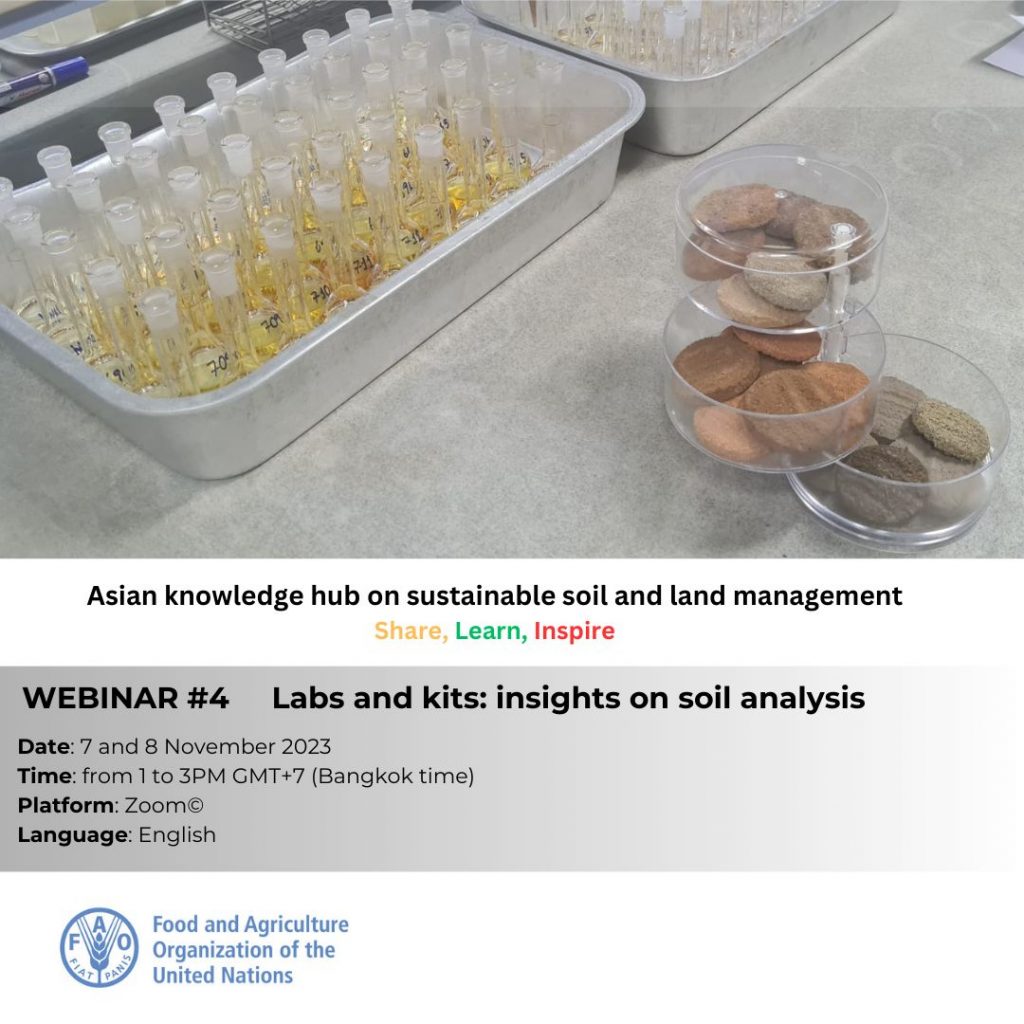
Webinar – Labs and kits: insights on soil analysis
This webinar is being organised by FAO and is one of a series of online events orchestrated to facilitate the use of the Asian knowledge hub on sustainable soil and land management within the region. It specifically aims to: The concept note below contains more information and the draft agenda.
Find out more »Webinar – Labs and kits: insights on soil analysis
This webinar is being organised by FAO and is one of a series of online events orchestrated to facilitate the use of the Asian knowledge hub on sustainable soil and land management within the region. It specifically aims to: The concept note below contains more information and the draft agenda.
Find out more »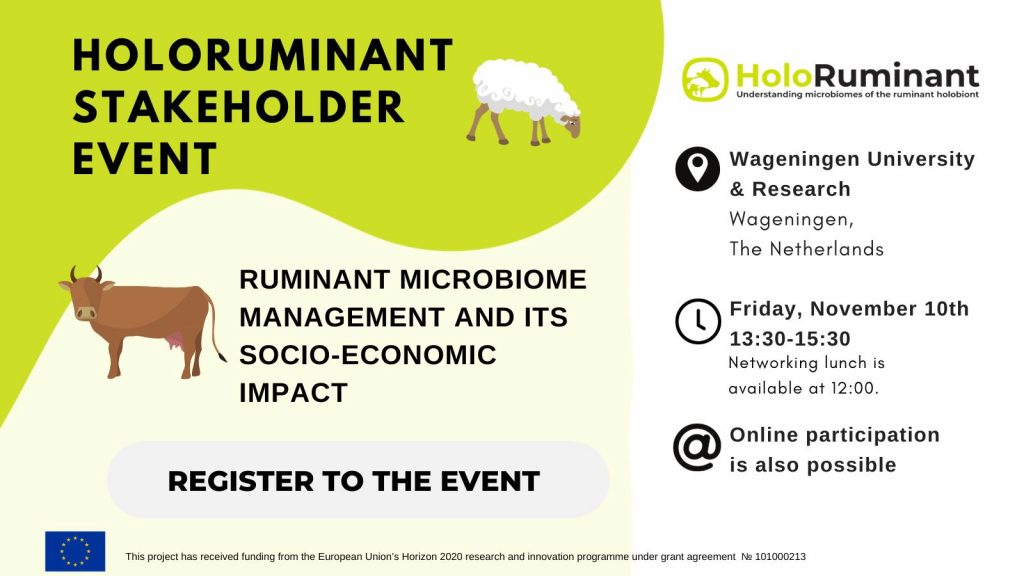
HoloRuminant Stakeholder Event
The event will be hosted in person at Wageningen Campus, yet participation is also possible online. HoloRuminant is a European research and innovation initiative exploring ruminant-associated microbiomes and their interaction with hosts across various life stages. The agenda for the event is as follows: 12:00 – 13:30 Walk-in and networking lunch 13:30 – 13:40 Opening and introduction of the project 13:40 – 13:45 Insights from the last year’s farmer focus groups (5 min) 13:45 – 13:55 Farm-level economic impacts of…
Find out more »
Seminar: GHG emissions & climate change mitigation in Mediterranean agricultural sectors
On 15 and 16 November, CIHEAM Zaragoza will organise an international seminar on greenhouse gas emissions and climate change mitigation in the Mediterranean agricultural sectors. The event has the collaboration and support of the National Institute for Agricultural and Food Research and Technology of the Spanish National Research Council (INIA-CSIC) in the framework of the presidency of the Global Research Alliance on Greenhouse Gases (GRA) and will bring together representatives from ministries, international organisations (GRA, PRIMA, OECD, FAO or the European Commission), as well as experts and scientists from…
Find out more »