The 2025 eGrad School Global Conference was held as a free, fully online event bringing together researchers, scholars, and changemakers from around the world. This vibrant virtual gathering centered Indigenous knowledge as a powerful force shaping the future of global research.
Building on the success of previous years, the 2025 conference showcased Indigenous-led research, leadership, and cross-cultural collaboration across diverse regions including Australia, Aotearoa New Zealand, the Pacific, Africa, Canada, the United States, and Europe.
For more information please click HERE
[Updated on 8 January 2026]
Closing date extended to: 13 January 2026, at 11:59 p.m. GMT
We are pleased to announce Round 7 of the CLIFF-GRADS Fellowship Programme is now open for student applications!
The Climate, Food and Farming, Global Research Alliance Development Scholarships (CLIFF-GRADS) Programme is a joint initiative of the Global Research Alliance on Agricultural Greenhouse Gases (GRA), the Global Methane Hub, and CGIAR Climate Action Program. CLIFF-GRADS builds capability in early-career scientists from developing countries to conduct applied research in agriculture greenhouse gas emissions quantification and mitigation.
We invite PhD students who meet the following criteria to apply:
- From developing countries;
- Undertaking their PhD in a University in a developing country; and
- Who have not previously been awarded a CLIFF-GRADS grant.
Successful applicants to the CLIFF-GRADS programme will go on short term (4-6 month) research stays at a host institution and will:
- Gain experience in the measurement, modelling and mitigation of greenhouse gas emissions, or carbon storage in agricultural systems relevant to developing countries;
- Build networks and experience other cultures; and
- Gain access to equipment and methodologies used by other institutions.
Learn more about the R7 opportunities and how to apply in the call document HERE.
Join leading scientists from New Zealand and Ireland for a deep dive into the latest research on plantain as a mitigation strategy in pasture-based systems. This webinar will unpack current evidence, explore the mechanisms behind plantain’s environmental benefits, and discuss practical considerations for farmers and advisors.
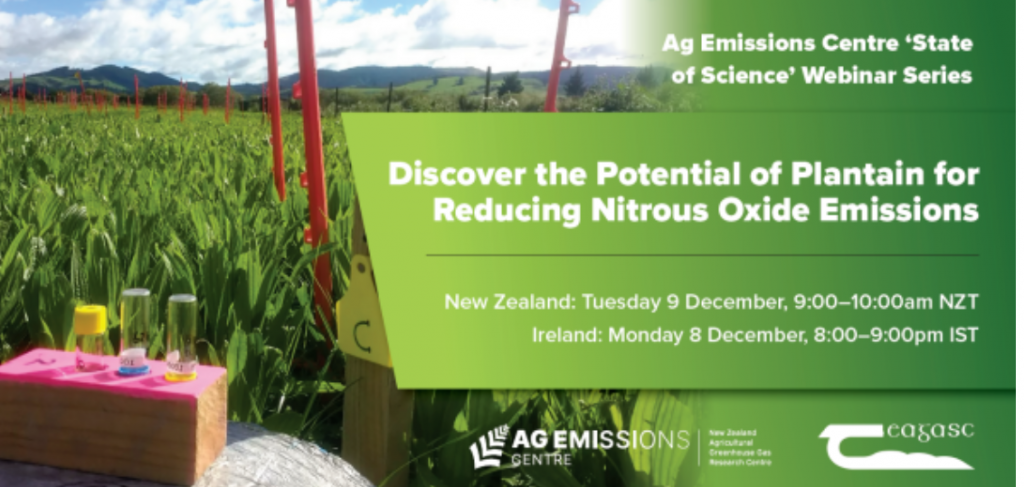
For more information and to register click HERE
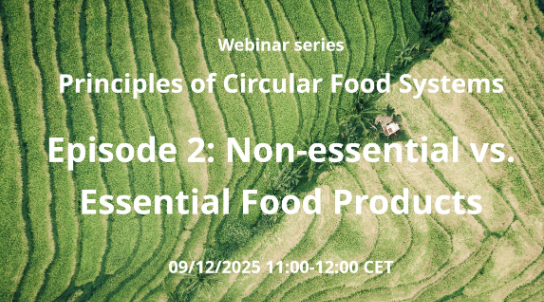
The Circular Food Systems Network, hosted by the Global Research Alliance on Agricultural Greenhouse Gases (GRA), is excited to launch our ‘Live Conversations’ webinar series:
The Principles of Circular Food Systems – Live Conversations
Join us for an engaging, podcast-style session where we dive deep into the core principles of circular food systems—not through formal presentations, but through dynamic conversations, critical questions, and multiple expert perspectives. Think of it as a live talk show on the future of circular food system
Episode 2: Non-essential vs. Essential Food Products
Date 09/12/2025 11:00-12:00 CET
Location: online (free registration below)
In this episode, we explore the principle of “avoiding non-essential products and the waste of essential ones”—a cornerstone of circular food systems. What does it mean to classify foods as essential or non-essential? Why does this matter for sustainability and equity? And how do cultural and regional differences shape these definitions?
Expect an open, conversational format as our guest experts unpack questions like:
- How do we define essential vs. non-essential foods in a circular bioeconomy?
- Who decides what is essential or not? What is the role different stakeholders?
- What benefits arise from avoiding non-essential food products?
- How do cultural and regional contexts influence what is considered “essential”?
- What are the environmental and social implications of reducing non-essential products like sugar?
Featuring special guests:
- Dr. Alon Shepon – Senior Lecturer in Environmental Studies at Tel Aviv University. Alon’s research focuses on sustainable food systems and nutrition. He is lead author of the study “Environmental and social opportunities of reducing sugar intake” and brings expertise on dietary shifts, resource efficiency, and global sustainability trade-offs.
- Dr. Abigail Muscat – Coordinating Advisor in European Research Collaborations at Wageningen University & Research. Abigail works at the science-policy interface on food systems, climate, and bioeconomy topics. She is co-author of the paper “Principles, drivers and opportunities of a circular bioeconomy” and specializes in strategies for transforming food systems through circular principles
Subscribe here!
Whether you’re a researcher, policymaker, food system innovator, or just curious about the future of circular food systems, this series is for you. Please subscribe to the webinar and don’t hesitate to share this even with your colleagues. In the week prior to the webinar you will receive a link for the webinar.
Subscribe HERE for Episode Nr.2
We are pleased to share the recording of the recent AgriDENZ–Qinisa Webinar: Charting the Course for Agricultural Greenhouse Gas Research in Southern Africa – a dynamic discussion that set the stage for a bold new era of international research cooperation and collaboration.
The webinar brought together experts from across the region and beyond to explore how Southern Africa can accelerate progress in agricultural greenhouse gas (GHG) mitigation. Speakers emphasized that the foundations for this new research paradigm are already taking shape. Now is the moment to build on these foundations, strengthen partnerships, and move from intention to action.
A clear message emerged: governments, researchers, and development partners must join forces to design and scale innovative financing and governance mechanisms that support long-term, regionally relevant agricultural GHG research. This includes creating frameworks where the private sector, multilateral agencies, national development banks, and other funders can co-invest in solutions that lower emissions while supporting resilient, productive agricultural systems.
We invite you to watch the full webinar and join the growing community committed to advancing low-emission agriculture in Africa.
👉 Watch the webinar HERE
Together, we can chart a more sustainable and collaborative path forward for agricultural research, innovation and climate action across the continent.
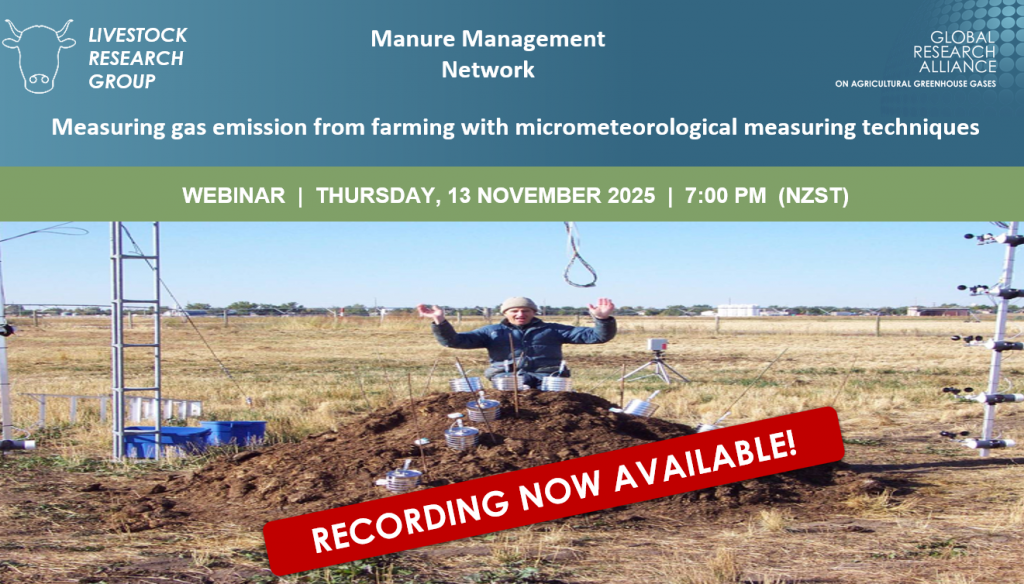
A recording of the Manure Management Webinar: “Measuring gas emission from farming with micrometeorological measuring techniques” is now available to view HERE.
Gaseous emissions from agriculture contribute significantly to greenhouse gas (GHG) and ammonia in the atmosphere, and climate change and pollution of aquatic ecosystems. The emission must be reduced and in the quest for low emission technologies and management methods, there is a need for accurate measurements of the emission. Reliable data from measurements and studies is needed for the development of emission models, low emission systems and for calculating the contribution of GHG to the atmosphere from farming. Three researchers with extensive experience in measuring gas emission from farming will present the great potential in the use of the micrometeorological methodology method, and pitfalls, understanding, and application of the use of it.
November 6, SINGAPORE/BRASÍLIA – Ahead of the United Nations Climate Change Conference in Belém, Brazil (COP30), the Global Methane Hub has launched a new globally coordinated research accelerator to fast-track innovations that reduce methane emissions from rice cultivation without compromising yields and profitability.
The Hub announced a $30 million commitment towards the Rice Methane Innovation Accelerator during Singapore International Agri-Food Week, and the Global Climate-Smart Agriculture Conference in Brasília, Brazil, in two countries where rice plays a significant role in diets.
To read more about this investment click HERE
AF4EU is a Horizon Europe project dedicated to promoting agroforestry across Europe through the creation of a multi-actor, interactive, and innovation-driven expanded agroforestry network, inspired by successful practical experiences.
This registration form allows you to enroll in the project’s final events, which will take place in Brussels on November 10–11, 2025. Inscriptions are open until November 6th.
To register please click HERE
On behalf of the African Climate Action Partnership (AfCAP) we cordially invite you to register for our upcoming webinar for our Rice Community of Practice (CoP) on “Overcoming barriers to climate-smart rice: exploring locally relevant implementation options”. This engaging session will bring together agricultural experts, policymakers, researchers, and development practitioners to address the challenges of implementing climate-smart rice practices in regions where adoption has been limited.
The webinar will explore key barriers to implementation, showcase innovative and low-cost strategies that are locally adaptable, and offer actionable recommendations to strengthen enabling environments and build capacity for sustainable rice production. Through expert presentations, regional case studies, and interactive discussions, participants will gain valuable insights into advancing climate resilience in rice systems.
Event Details :
Title: Overcoming barriers to climate-smart rice: exploring locally relevant implementation options
When: 11th November 2025
Time: 11:00 SAST / 12:00 EAT / 10:00 WAT
Where: Via Zoom
We’re pleased to let you know that new materials from the new Zealand Climate Smart Agriculture Initiative are now available on the website. These resources focus on livestock greenhouse gas measurement and may be useful to your work or to others in your networks.
You’ll find the new content under the Livestock Emissions Measurement section, located within the Livestock Research Group → Collaborative Activities. This page brings together practical information on key measurement methods including respiration chambers, the SF6 tracer technique, headbox systems, and the Greenfeed emission monitor.
Under this section, two new technical pages have been added:
- Headbox Respiration Systems – includes documents such as Headbox Best Practice and Headbox Troubleshooting Advice, along with a YouTube playlist covering design and operation, developed for the international workshop hosted in Cambodia’s Royal University of Agriculture in 2025.
- Greenfeed Emission Monitor – features training videos from the workshop on Quality Assurance for Greenfeed Users held at the University of Los Baños – Dairy Training and Research Institute. This workshop was jointly led by the Philippine and Vietnam Greenhouse Gas Measurement Hubs, with support from the New Zealand Government and the University of California, Davis.
A series of 4 engaging online workshops exploring innovative research and practices for soil health, carbon sequestration, and sustainable land management.
Hear from experts around the world sharing cutting edge insights and practical approaches.
First webinar : Carbon sequestration potential in Agricultural Soils– Click HERE for recording.
Second webinar : Advances in Spectroscopy and Analytical Approaches for Characterizing Soil Organic Carbon – Click HERE for recording.
Third webinar : -Boosting Soil Organic Carbon accrual: Agroforestry on Grasslands of Uruguay, Germany and New Zealand Recording to follow
Fourth webinar : Peatlands and Greenhouse Gases: Insights and Mitigation Pathways from New Zealand, South Africa, and Germany – Recording to follow