
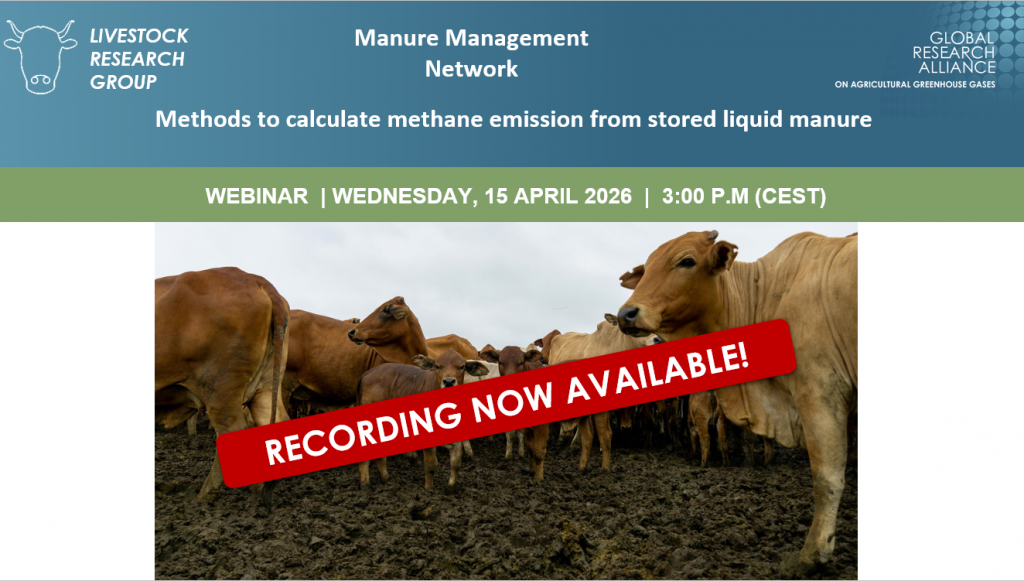
Manure management on livestock farms contributes significantly to the climate impact of agriculture via emissions of methane, nitrous oxide and ammonia. The IPCC tier 2 method to estimate methane emissions, developed in 1996, is based on the maximal methane production rate of fresh excreta (B0) and a conversion factor MCF to account for storage conditions. This calculation concept was meant to be simple, because it should be applicable worldwide, including regions where the staff carrying out the calculations has limited information about manure management systems or expertise in how management and environmental conditions may affect the processes behind methane emissions. Three researchers with much experience in developing models to calculate methane emissions from livestock farming will present new improvements of the tier 2 method as well as alternative approaches for calculating the emission. The intention of the webinar is to stimulate new initiatives to investigate the calculation of methane emissions from manure management, with the aim to develop a new generation of methods.
A video recording of the webinar are now available to view HERE
Location: Teagasc, Animal & Grassland Research Centre, Grange, Dunsany, Co. Meath C15 PW93, Ireland
Salary: Post Doc (Level 1) with a Salary Scale of €44,569 to €48,895
Closing Date: 17/04/2026 12:00 PM
For more information please click HERE
Location: Teagasc, Animal & Grassland, Research and Innovation Centre, Grange, Dunsany, Co. Meath. Salary: Research Officer with a Salary Scale of €41,996 to €79,618
Closing Date: 16/04/2026 12:00 PM
For more information please click HERE
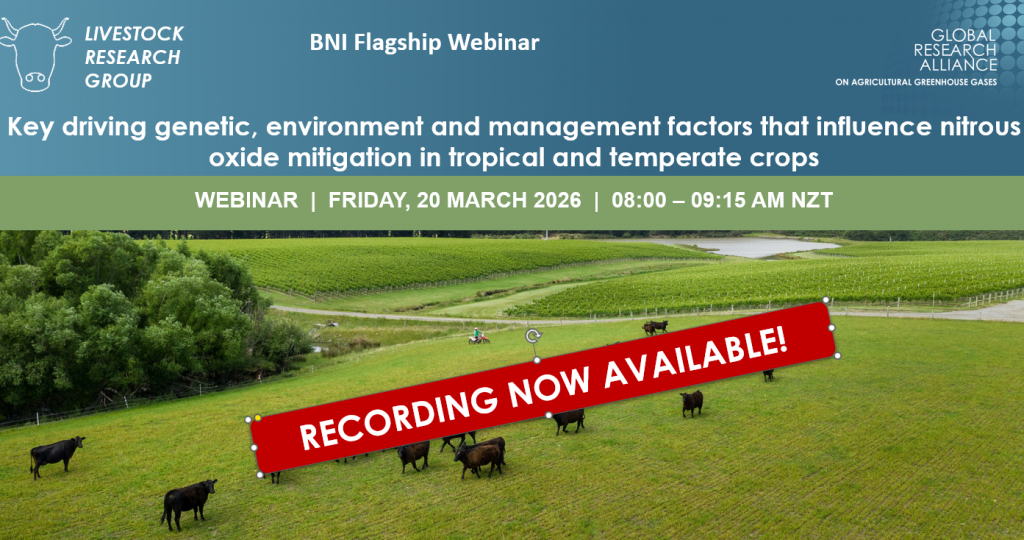
This webinar presents the findings of a global meta-analysis examining the factors that regulate the effectiveness of biological nitrification inhibition (BNI) in reducing nitrous oxide (N₂O) emissions from agricultural systems. BNI is a plant-mediated process in which certain metabolites inhibit soil nitrifying microorganisms, slowing the conversion of ammonium to nitrate and potentially reducing N₂O emissions. By synthesizing results from 23 published studies, this analysis evaluates the influence of genetic, environmental, and management factors on cumulative N₂O emission reduction. The results highlight that plant genus and species, soil physical characteristics (including texture, clay and sand content, and bulk density), soil nutrient status (such as soil organic carbon, total nitrogen, available phosphorus, NH₄⁺ and NO₃⁻), drainage conditions, irrigation, geographic factors, measurement timing, and nitrogen fertilization practices (type and application rate) are key drivers shaping BNI effectiveness.
A video recording of the webinar are now available to view HERE
About the project:
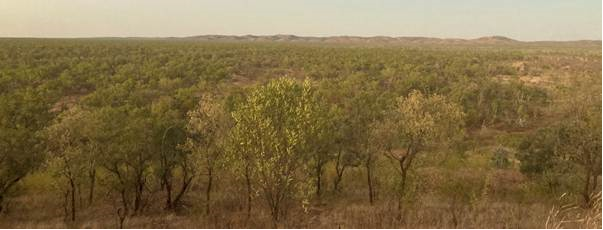
Native pastures of northern Australia are botanically diverse, supporting hundreds of species of grasses, forbs, trees and shrubs. Species have different nutritive value, digestibility and some have anti-methanogenic properties. Current carrying capacity methodology assumes cattle eat only the herbaceous layer of vegetation including grasses and forbs, but in many environments, such as in Central Australia and the Victoria River District, trees and shrubs are known to contribute a significant component of the diet through browse. However, which species they are eating and under what conditions is not well known. Current methods used to assess non-grass dietary components are of limited use in detecting browse in northern Australia. This PhD is part of a larger Zero Net Emissions Agriculture CRC project -Low Methane Feedbase Program- which aims to quantify the anti-methanogenic properties of northern Australian vegetation, but this information will be of limited applicability without knowing how these species currently contribute to cattle diets across northern Australia. Greenhouse gas emission estimates cannot be truly representative for the system without this.
This PhD will use field collected data, including faecal environmental DNA, to understand the contribution of different plant species in the diets of cattle in northern Australia. The student will then use these data along with anti-methanogenic compound concentrations and nutritional value data to test current greenhouse gas estimates for Australia’s north. This PhD is an excellent opportunity to work closely with government and industry partners including researchers from the Northern Territory Department of Agriculture and Fisheries
The student will ideally be based in Darwin or Alice Springs, but other locations are negotiable.
Project benefits
- An Australian Government Research Training Program (RTP) scholarship valued at $34,315/yr (from 2026, indexed annually and tax exempt) for 3 years full time from commencement + $10,000/yr top-up
- Relocation allowance ($2k)
- Paid sick leave
- Maternity leave
Project supervisors and advisors:
Beth Penrose (Charles Darwin University)
Maxine Piggot (Charles Darwin University)
Robyn Cowley (Northern Territory Government)
Caroline Pettit (Northern Territory Government)
About you
Essential skills and experience:
- First Class Honours or Masters degree containing a substantial research component in a relevant field such as agriculture, environmental science or similar
- Australian driving license or the capacity to easily get one
- Experience collecting field samples
- Ability and willingness to travel to regional and remote locations
Desirable skills and experience:
- Experience with molecular techniques and/or environmental DNA analysis
- Modelling experience using greenhouse gas, crop or animal models
- Publications, e.g. research reports, journal publications
How to apply
Please provide:
- A curriculum vitae, including a list of any peer-reviewed publications, conference presentations and relevant work and/or research experience
- A brief statement not exceeding 500-words in length that explains why you are interested in this research project/area
Send these documents to Beth Penrose ([email protected]). This position is open until filled.
For more information, please email Beth or contact her on 0436 839 662

On the 12th of February, the AgriDENZ project hosted a webinar on farm-level GHG accounting where Koen Deconinck from the OECD Trade and Agriculture Directorate presented ongoing work including insights from a new comprehensive database of 200 tools for farm-level GHG estimation.
Key takeaways:
- Farm-level GHG accounting underpin many initiatives to disclose and mitigate emissions in the agri-food supply chain as a large share of most agri-food products arise at the farm-level.
- Different farm-level GHG accounting methods can lead to different results which can cause confusion and conflicts. An increasing number of countries are taking action to reduce fragmentation by providing nationally coordinated methodologies.
- At the OECD, work is ongoing to create a database of farm-level GHG accounting tools and so far over 200 tools have been included. Some preliminary findings are that most tools focus on one country and that many tools follow the GHG protocol or ISO standards as well as the IPCC guidelines. The scopes included in the tools range from scope 1 emissions (on-farm emissions), purchased energy, to also including upstream emissions. Downstream emissions are less common.
- There is ongoing dialogue among OECD member states on how to reduce fragmentation of approaches to farm-level GHG accounting also within and between countries.
Following the presentation, there was a lively Q&A session where over 200 participants were curious to hear what Koen Deconinck had to say about ways forward to reduce fragmentation, how a set of international best practice recommendations might look like and to what extent harmonization of approaches is possible.
Please find the video recording HERE.
In AgriDENZ, the webinar series on farm-level GHG accounting will continue on the 19th of March at 9am CET / 9pm NZDT where we will present ongoing work in AgriDENZ on comparing farm-level GHG accounting approaches developed in Germany and New Zealand – more information on this will follow.
This is the schedule for applying under the “Single Phase” mechanism:
Single Phase – Dates
- Announcement of the Call for Proposals: December 2025
- Opening for Registration of Institutions and Submission of Projects: December 15, 2025
- Deadline for Project Submission (Single Phase): April 20, 2026, 3:00 PM (Eastern Time, Washington D.C.)
- Project Evaluation: April 21 to May 29, 2026
- Selection of Winning Projects: July/August 2026
For more information please click HERE
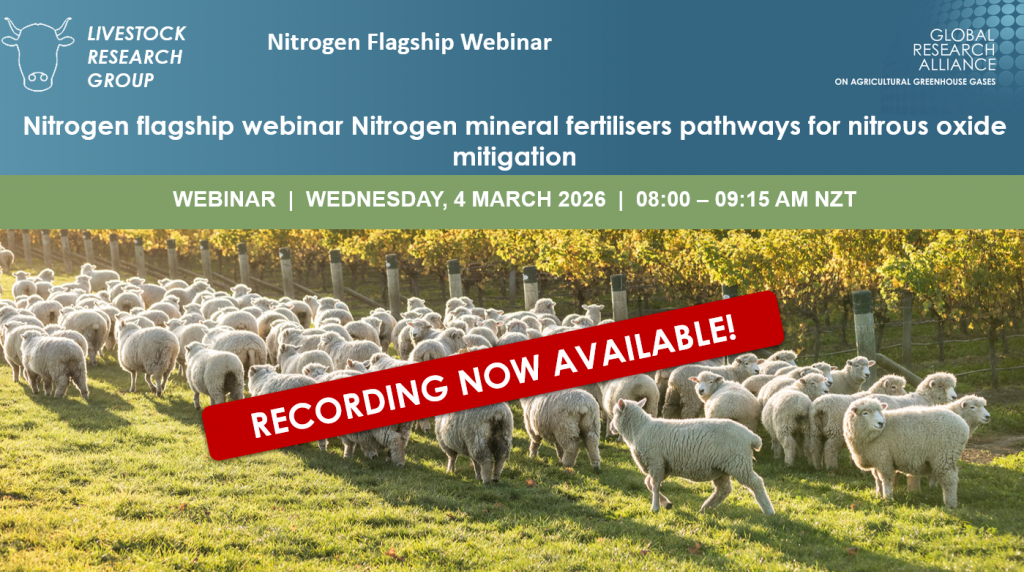
A recording of the Nitrogen flagship webinar, the keys to nitrous oxide mitigation in agricultural agroecosystems that was held on 4 March is now available to view HERE
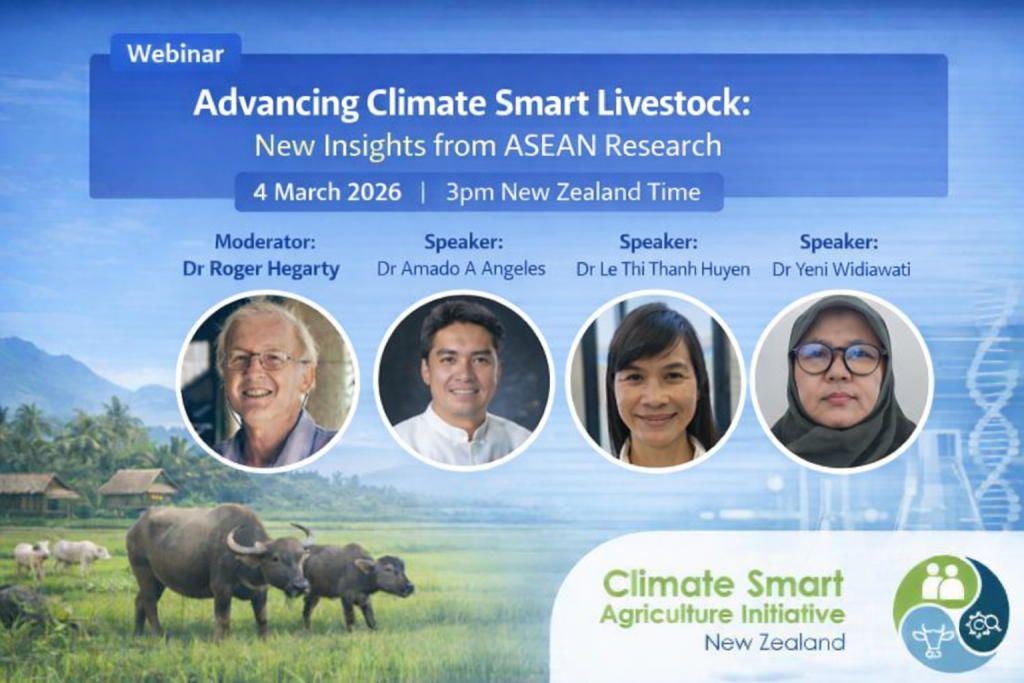
A recording of the webinar held on 4 March is now available to view HERE
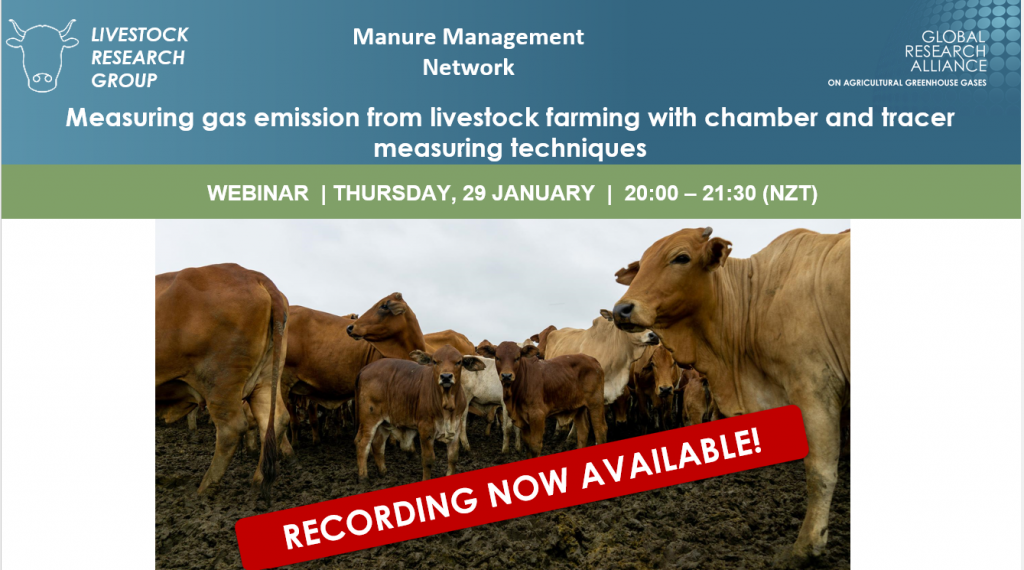
A recording of the Manure Management Network Webinar – Measuring gas emission from livestock farming with chamber and tracer measuring techniques is now available to view HERE
Gaseous emissions from agriculture contribute significantly to greenhouse gas (GHG) and ammonia in the atmosphere, and climate change and pollution of aquatic ecosystems. Reliable data from measurements and studies is needed for the development of technology and management practice to reduce emissions, calculate emission inventories (e.g. IPCC) and provide valid data to assess emissions reduction for carbon credit trade. Three researchers with extensive experience in measuring gas emission from farming will present the great potential in the use of the chamber and tracer gas measuring method, and pitfalls, understanding, and application of the use of it.
The CLIFF‑GRADS Round 7 Information Session was held as an online event to support and encourage women applicants from around the world. This podcast‑style interview highlighted the experiences of three CLIFF‑GRADS alumni who shared practical insights into the application process and the realities of undertaking an international research stay.
Building on the programme’s commitment to broadening participation, the session showcased women’s leadership, collaboration, and contributions across agricultural greenhouse gas research.
Watch the YouTube recording HERE
NOW OPEN
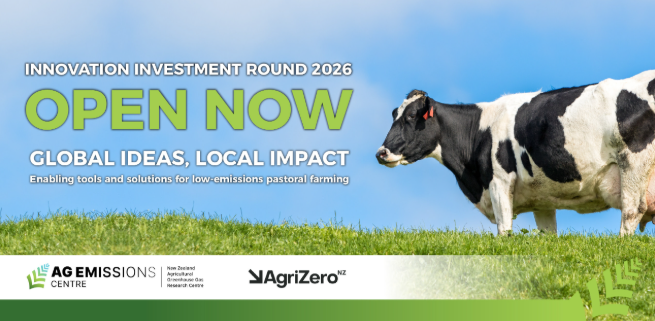
The 2026 Innovation Investment Round is now open for low-emissions farming innovation
The Ag Emissions Centre and AgriZeroNZ are pleased to announce that the 2026 Innovation Investment Round is now open.
We’re seeking bold, evidence-based ideas that can accelerate practical low-emissions solutions for New Zealand’s pastoral farming systems. Expressions of interest (EOIs) are welcome from both NZ and international applicants.
Funding available:
Up to NZ$2m for R&D Full Proposals (up to 2 years)
Up to NZ$50k for R&D Idea proposals (up to 6 months)
Research areas include:
- Automatic identification of urine patches
- Novel low-emissions nitrogen fertilisers
- Improved prediction from in-vitro to in-vivo
- Pasture-focused dietary manipulation
- New/improved approaches to reduce N₂O or methane at scale
EOIs close 2pm NZDT, 24 February 2026
To download guidelines and to apply please click HERE