
‘Reducing greenhouse gas emissions from livestock: best practice and emerging options’ was jointly published by the GRA’s Livestock Research Group and the Sustainable Agriculture Initiative (SAI) Platform in late 2014. It is now one of the most downloaded documents on the GRA website.
With thanks to funding support from New Zealand and translation provided by LRG members in France, Chile and Colombia, this popular publication is now available in French and Spanish.
The guide is intended to help farmers and industry leaders make progress on meeting global food demand while reducing the industry’s contribution to climate change. It summarises current best practices ready for implementation at the farm level, as well as emerging options at various stages of research to reduce the greenhouse gas emissions intensity of livestock production across a range of farm systems. It covers intervention options for animal feed and nutrition, genetics and breeding, rumen modification, animal health, manure, and grassland management.
- Download the guidelines in English
- Download the guidelines in French
- Download the guidelines in Spanish
Hard copies of the guidelines in any of the three languages are available from the LRG: [email protected]

Researchers show how improved greenhouse gas inventories for the livestock sector meet international requirements, support climate change and productivity goals and help broaden countries’ policy options.
For media interviews and enquiries please contact:
Andy Reisinger / +64 21 613 125 / [email protected]
Julianna White / +1.802.777.7017 / [email protected]
WELLINGTON, NEW ZEALAND // BURLINGTON, USA (23 August 2016) – Scientists say that using advanced greenhouse gas inventory and accounting methods to monitor, verify and report on emissions will be necessary for livestock to demonstrate that it is contributing effectively to the ambitious goals of the Paris Agreement on climate change.
Scientists from the Livestock Research Group of the Global Research Alliance on Agricultural Greenhouse Gases (GRA) and the CGIAR Research Program on Climate Change, Agriculture and Food Security (CCAFS) argue in a newly released brochure that more accurate and robust information on greenhouse emissions and productivity from livestock, captured through an advanced inventory system, will be essential if the sector is to contribute effectively to climate and development outcomes.
“61 nations included mitigation in the livestock sector in their Intended Nationally Determined Contributions submitted to the United Nations Framework Convention on Climate Change in 2015,” Lini Wollenberg, leader of the CCAFS Low Emissions Development research program based at the University of Vermont’s Gund Institute for Ecological Economics, said. “They need advanced greenhouse gas inventories to report on changes in emissions and the reductions in emissions intensity that result from more productive and efficient livestock systems.”
Simple inventory methods (called Tier 1) use livestock numbers multiplied by a constant emission factor per animal, meaning that the only way to reduce emissions from livestock is to reduce animal numbers – not plausible for countries concerned with food security and rural development. Researchers point out that livestock development and climate change outcomes can support each other: more productive and efficient farm systems generally produce food at much lower greenhouse gas emissions per unit of product.
The brochure draws on a global analysis demonstrating that doubling the milk production of low-yielding dairy systems, from 1,500 to 3,000 litres per cow per year, could roughly halve the greenhouse gas emissions per litre of milk from those systems. However, if a country’s livestock greenhouse gas inventory does not use advanced methods (called Tier 2), then the impact of such productivity gains is missed.
Advanced inventories allow countries to understand the impact of different productivity measures on emissions. For example, reductions in emissions intensity may be achieved through (see e.g. here and here):
- Improved digestibility of feeds
- Increased pregnancy rates for mature breeding cows
- Increased weight gains in finishing animals.
Such productivity measures may support rural economic development, form the basis of a climate change mitigation plan to be submitted to the UNFCCC, or help qualify a country for climate finance.
Uruguay, for example, used its advanced greenhouse gas inventory in the livestock sector to commit to reducing emissions intensity in livestock (i.e. emissions per kg of meat) by 31-46% by 2030 from base year 1990. The inventory also allows Uruguay to incorporate outcomes from productivity improvements into its domestic policies and use them to demonstrate progress towards its INDC.
“Many countries know that a Tier 2 inventory would be incredibly helpful for them, but they are deterred by the perceived complexity and the resources required. An inventory based on Tier 2 methods is by its nature more detailed than the simple Tier 1 methods that most countries start out with, but it does not have to be much more complicated,” explained Harry Clark, Co-chair of the GRA’s Livestock Research Group and Director of the New Zealand Agricultural Greenhouse Gas Research Centre.
“Countries need guidance and support on how to set up an inventory that is credible and defensible but does not place unrealistic demands on their data sources,” Clark said.
“Livestock development and climate change: The benefits of advanced greenhouse gas inventories” was first published by the Global Research Alliance on Agricultural Greenhouse Gases and the CGIAR Research Program on Climate Change, Agriculture and Food Security on 23 August 2016. It is available online at: http://hdl.handle.net/10568/76520
Further reading:
Livestock Research Group of the Global Research Alliance on Agricultural Greenhouse Gases (GRA): www.globalresearchalliance.org/research/livestock
Emissions data, greenhouse gas emissions measurement methods, and tools, for agriculture: www.samples.ccafs.cgiar.org
Low emissions development in agriculture: quantification, decision-making and implementation: https://ccafs.cgiar.org/themes/low-emissions-agriculture
The Global Research Alliance on Agricultural Greenhouse Gases brings countries together to find ways to grow more food without growing greenhouse gas emissions. Its Livestock Research Group (LRG) is focused on reducing the emissions intensity of livestock production systems and increasing the quantity of carbon stored in soils supporting those systems. The LRG works with scientists, farmers and farm advisors, industry and policy makers to research mitigation options, share knowledge and experiences and help strengthen the resilience of livestock farming.
The CGIAR Research Program on Climate Change, Agriculture and Food Security (CCAFS) brings together the world’s best researchers in agricultural science, development research, climate science and Earth System science, to identify and address the most important interactions, synergies and trade-offs between climate change, agriculture and food security. The University of Vermont hosts research focusing on low emissions agriculture. Research is carried out with support from CGIAR Fund Donors and through bilateral funding agreements. For details please visit https://ccafs.cgiar.org/donors.
The New Zealand Agricultural Greenhouse Gas Research Centre (NZAGRC) coordinates research and development into agricultural greenhouse gas mitigation solutions in New Zealand. The NZAGRC’s focus is to provide knowledge, technologies and practices that grow agriculture’s ability to create wealth for New Zealand in a carbon-constrained world. The NZAGRC works in partnership with nine New Zealand organisations to deliver practical on-farm solutions to mitigate methane, nitrous oxide and increase understanding and stability of soil carbon stocks.
On 20th July 2016, the first meeting of the network “Actions for Mitigation of and Adaptation to Climate Change in Livestock Sector in Mediterranean Area”(MLN) was held in Bella, Italy. The meeting was hosted by the Extensive Animal Husbandry Research Unit of the Council for Agricultural Research and Economics (CREA-ZOE). The idea to create MLN arose at the annual LRG meeting held at Lodi (IT) and was launched at the GRA Engagement Workshop, held in Izmir (Turkey) on November 18-19 2015, to deal with three areas representing key concerns for livestock in the Mediterranean region: water, mycotoxins, and good practices of mitigation and adaptation.
Outcomes of the meeting included actions to gather literature on themes of interest and on relevant national and international programs to MLN, and the decision to apply a COST project to MLN activities, with particular attention paid to methods and to novel concerns (i.e. emerging mycotoxins).
All the scientists who expressed their interest in MLN will be invited to join the project and to share this information with other colleagues, especially if belonging to countries not presently involved.
A summary report is available here. All people interested to join MLN can contact the GRA Secretariat or Giacomo Pirlo ([email protected]).
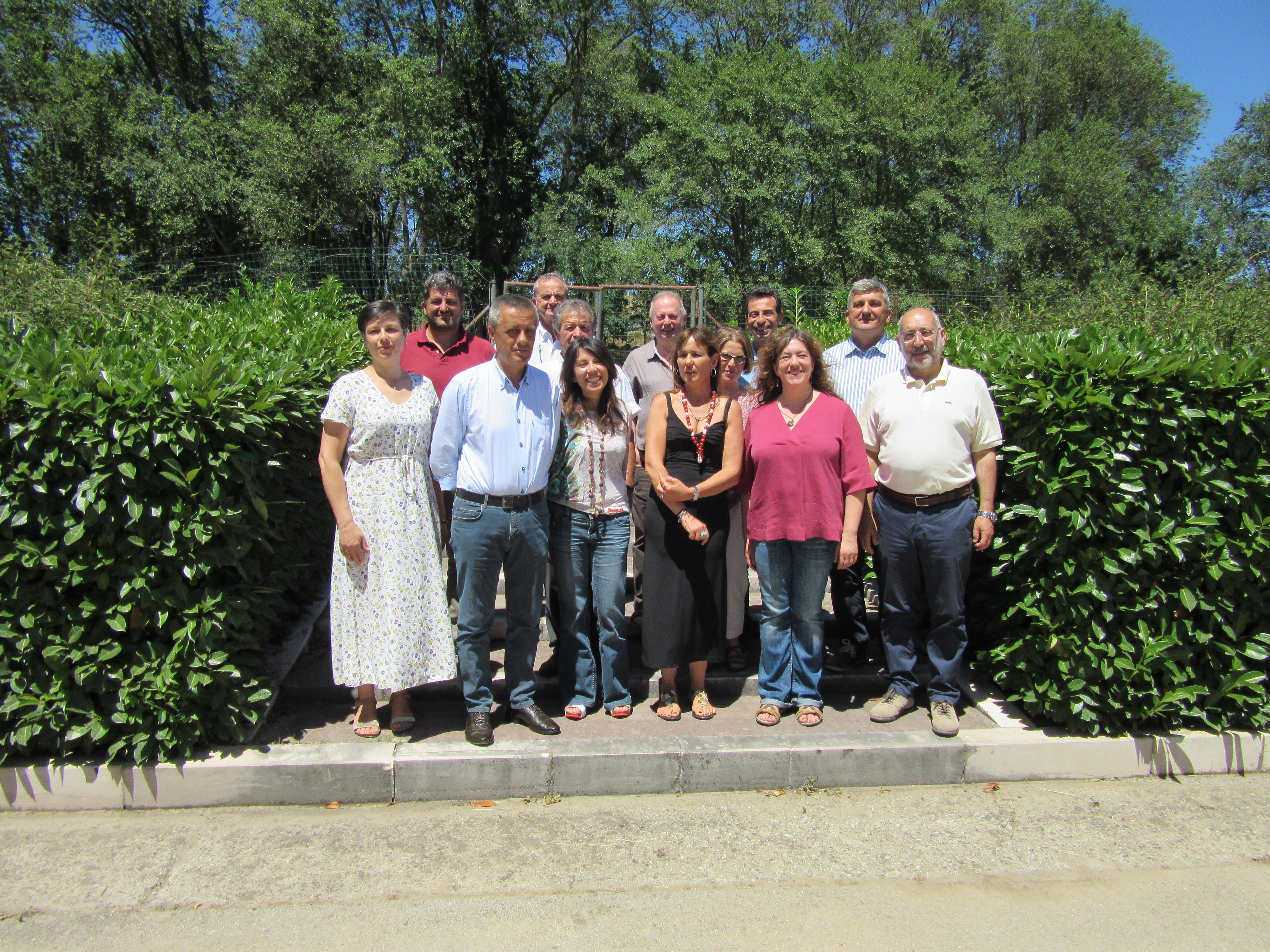
The latest workshop report for the Animal Health & Greenhouse Gas Emissions Intensity Network (AHN) is now available. This year’s workshop, held on Tuesday 15 March 2016, brought together researchers and research funders to exchange information on scientific research and on other initiatives with which the Network is developing links. The workshop was attended by 21 participants representing 9 countries.
The Animal Health and Greenhouse Gas (GHG) Emissions Intensity Network is a United Kingdom-led initiative of the Livestock Research Group (LRG) of the Global Research Alliance on Agricultural Greenhouse Gases (www.globalresearchalliance.org), and aims to bring together researchers in relevant disciplines (veterinary science, epidemiology, animal science, modelling, GHG research and food security) from across the world to investigate links and synergies between animal diseases and GHG emissions intensities, and possible GHG mitigation through disease control.
The March edition of the World Farmers’ Organisation (WFO) Farmletter focuses on livestock and includes an article outlining a project from the Livestock Research Group’s workplan, ‘Reducing enteric methane for improving food security and livelihoods’ – a joint initiative of the United Nations Food & Agriculture Organisation (FAO) and the New Zealand Agricultural Greenhouse Gas Research Centre (NZAGRC). The project will design cost-effective intervention packages for specific production systems, aimed to improve farm productivity, food security and rural livelihoods.
The project is funded by the GRA Partners Climate & Clean Air Coalition (CCAC) and the FAO, and by the New Zealand Government.
Download Farmletter (LRG article @ pages 14-17)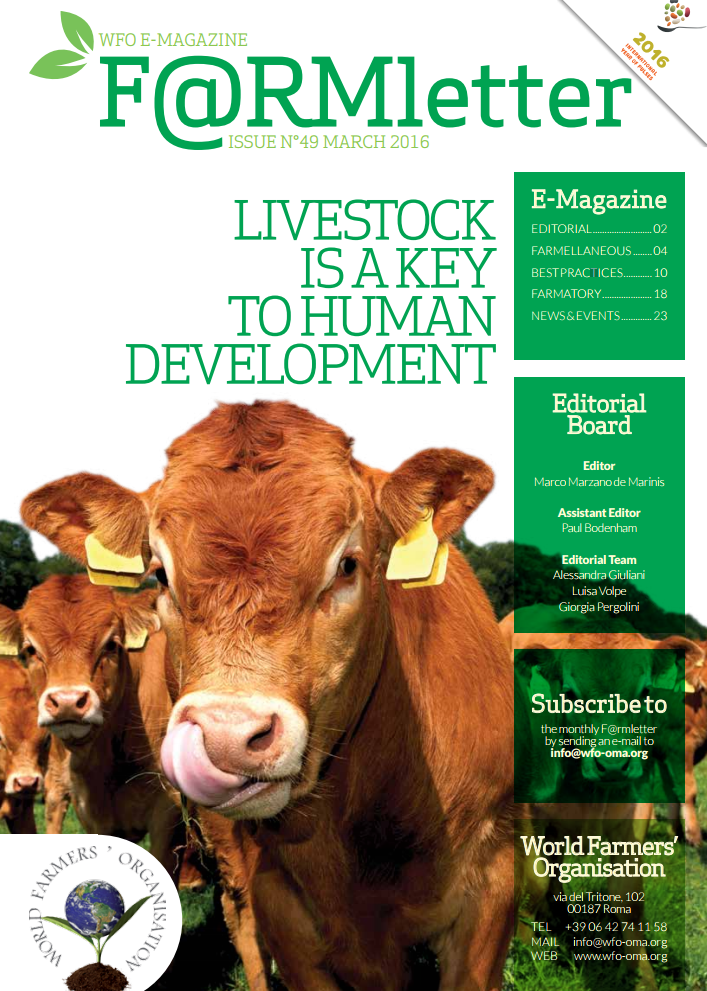
Three Research Groups of the GRA, Croplands, Livestock and Paddy Rice, have each produced an easy-to-read overview of their group activities and structure.
Each of the brochures cover the six areas of work that the GRA focuses on: understanding the current research landscape, building capability, good practice guidance and methodologies, research networks and databases, collaborative research, and policy support & links to international initiatives.
- 2016 PRRG Brochure
- 2016 CRG Brochure
- 2017 LRG Brochure (updated March 2017)
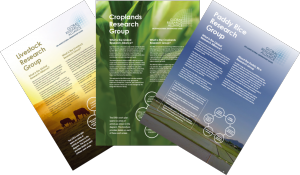
More information on each of the Research Groups can be found on the GRA website.
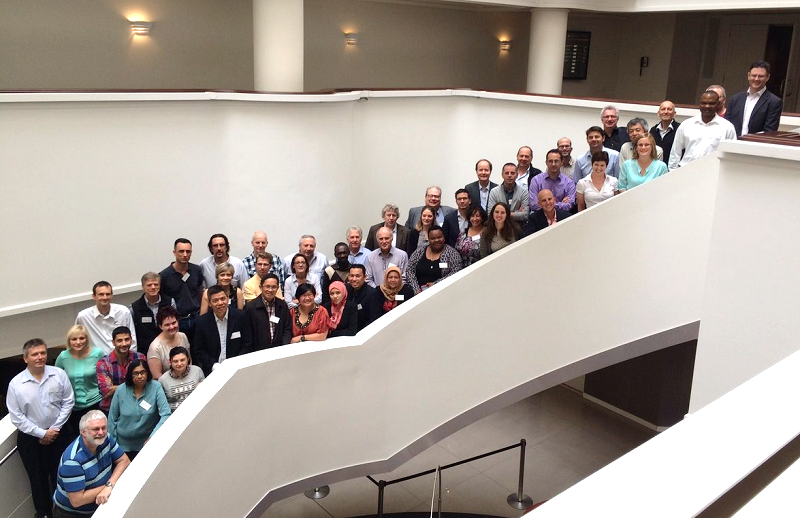
The Livestock Research Group held another successful meeting 19-20 February 2016, this time in Melbourne, Australia. A highlight of this year’s LRG meeting was a joint meeting with the newly formed Integrative Research Group (IRG), which will centre around a number of networks. The IRG was agreed at the GRA Council meeting in September 2015 as a merger of the previous Soil Carbon Nitrogen Cycling Group with the Inventories and Monitoring Group. The meeting was attended by Australia, Belgium, Brazil, Canada, Chile, Colombia, Denmark, France, Ghana, Indonesia, Ireland, Italy (via Skype), Japan, Lithuania, Malaysia, Netherlands, New Zealand, Philippines, Spain, Sri Lanka, Switzerland, Thailand, United Kingdom, USA and Vietnam, along with Tanzania, Uganda and other invited guests.
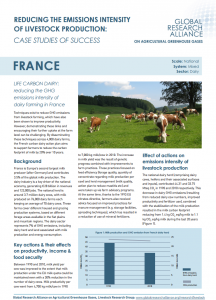 The Livestock Research Group has released a new case study in its series documenting countries’ on-farm successes in improving the productivity of livestock farming and reducing GHG emissions intensity. French dairy farmers made significant productivity gains between 1990 and 2010, which had a demonstrable impact on GHG emissions. A new ‘Life Carbon Dairy Action Plan’ is helping them continue to reduce the emissions intensity of milk production, and make other environmental gains, aiming for a reduction in milk’s carbon footprint of 20% over the next 10 years. Read the brochure here
Reducing enteric methane for improving food security and livelihoods
A new brochure is now available on the collaborative project between the GRA and the FAO “reducing enteric methane for improving food security and livelihoods”. This project is identifying the best options to available to farmers now that can use to improve the productivity of their ruminant livestock and reduce the amount of enteric methane these animals produce.
Read the brochure to learn more about how this project is developing regionally appropriate packages of on-farm practices and interventions and understanding how these packages are best shared with farmers.
Download the latest version of the Livestock Research Group Newsletter
The December 2015 edition of the LRG newsletter is now available. The newsletter covers a recent livestock and greenhouse gas inventory workshop held in South-East Asia, includes an article from the CGIAR’s Climate Change Agriculture and Food Security programme sharing their views on the outcomes of the recent international climate change negotiations. Also covered are project summaries from research fellows from Uganda and Denmark.
The Newsletter also includes further details about the 8th LRG meeting to be held in Melbourne, Australia alongside the Greenhouse Gas and Animal Agriculture Conference in February 2016 – download the Newsletter for more information!